Go Where? Do What?

Jonah Takes a Do-Over
Jonah 3:3 (New Living Translation)
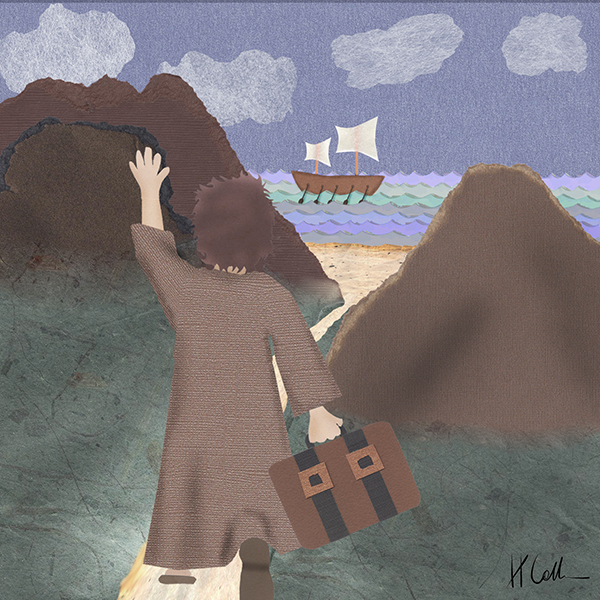
This time Jonah obeyed the Lord’s command and went to Nineveh, a city so large that it took three days to see it all.

After his initial refusal (and the terrible consequences that followed), Jonah has finally arrived at the city of Nineveh.

Nineveh was the capital of the kingdom of Assyria, in what is now northern Iraq. In Genesis 10:8-12, we learn that Nineveh was founded by a great warrior named Nimrod. (For those of you who grew up in the 1980s, yes, that is an unfortunate name.) Zephaniah 2:13-15 talks about the destruction of Assyria, including “its great capital, Nineveh” and Nahum 3:1 calls it a “city of murder and lies.” God called it the “great city of Nineveh” in Jonah 1:2. According to The New Interpreter’s Dictionary of the Bible, “The Old Testament thus presents two images of Nineveh: the arrogant city that deservedly suffers divine punishment and the repentant city that God spares.”

It’s important to note here that the Assyria Jonah has not entered is not an Israelite kingdom, and its capital city of Nineveh is not filled with followers of God. And yet God has chosen to call an Israelite prophet to proclaim their guilt and to call them to repentance.

Question:
Have you ever felt called by God to do something that didn’t entirely make sense to you at the time? Have you ever walked into a situation for which you felt entirely unprepared?

Posted in Jonah, Pondering Scripture | Tagged , , , , | Leave a comment

Jonah Takes a Do-Over

Jonah Takes a Do-Over
Jonah 3:1-2 (New International Version)
Then the word of the Lord came to Jonah a second time: “Go to the great city of Nineveh and proclaim to it the message I give you.”

In the last verse of chapter two, we saw Jonah being unceremoniously deposited on the Mediterranean shore. Wasting no time, God immediately speaks to Jonah, using the exact same words of command as in verse 1:2: Get up! Walk to! Proclaim! Even though Jonah has taken a rather large and dramatic detour, the call to action is the same: “Get right up, walk to the great city of Nineveh, and proclaim against it.”

Jonah’s disobedience has not changed God’s mind at all.

There’s also something else that hasn’t changed: the plight of the Ninevites. They are living in a way that is dangerous for their spirits, and God knows that they need a course correction. But Jonah’s rebellion has managed to delay the arrival of God’s word. During Jonah’s flight to Joppa, the struggle in the storm, the time inside the fish, and now the journey to the city — during all that time, the people of Nineveh had not heard the consequences of their unhealthy behavior.

Jonah did not just deny God. He also denied the people of Nineveh the opportunity to change and to rejoice in God’s forgiveness and grace.

Sometimes we think that our actions don’t really affect the people around us. But they can. And they do.

Question:
When has another person been affected negatively by a bad decision you had made?

Posted in Jonah, Pondering Scripture | Tagged , , , , , , | Leave a comment

Jonah’s Time-Out is Over

Jonah Gets a Time-Out
Jonah 2:7-10 (New Living Translation)
As my life was slipping away, I remembered the Lord. And my earnest prayer went out to you in your holy Temple. Those who worship false gods turn their backs on all God’s mercies. But I will offer sacrifices to you with songs of praise, and I will fulfill all my vows. For my salvation comes from the Lord alone.” Then the Lord ordered the fish to spit Jonah out onto the beach.

“As my life was slipping away, I remembered the Lord. And my earnest prayer went out to you.” Put aside everything we’ve learned about Jonah so far, and imagine that these words are the only thing you know about him.

In the last moments before what he was sure was going to be his death by drowning, Jonah says that he reached out to God, thinking of the Temple in Jerusalem and praising God with his last breath.

“Wow!” you might think, “This is a man of deep faith and conviction!”

“For my salvation comes from the Lord alone,” now declares Jonah. It is immediately following these words of faith that Jonah is forcibly ejected from the fish’s belly onto the shore. “For my salvation comes from the Lord alone,” Jonah prays and is released from his stinky, fishy time-out. It’s as if God is telling Jonah that he is going to take him at his word here. If Jonah has finally realized that his salvation is found only in God, then maybe — just maybe — he will rejoice in God’s mercy and decide to follow God’s plan.

Question:
How well do your words match up with your actions?

Extra:
In Matthew 1:21, an angel will appear to Joseph in a dream, reassuring him that his wife Mary is about to give birth to the Son of God. Joseph is told “you are to name him Jesus, for he will save his people from their sins.” The name Jesus in Hebrew is Yeshua, which comes from the word for salvation that Jonah uses in 2:9 when he declares that his “salvation comes from the Lord alone.”

Posted in Jonah, Pondering Scripture | Tagged , , , , , , , , | Leave a comment

Sinking

Jonah Gets a Time-Out
Jonah 2:5-6 (Today’s New International Version)
“The engulfing waters threatened me, the deep surrounded me; seaweed was wrapped around my head. To the roots of the mountains I sank down; the earth beneath me barred me in forever. But you, Lord my God, brought my life up from the pit.”

What a vivid picture these two verses paint. The smothering waters, the suffocating abyss. Crowned with seaweed, Jonah sinks ever deeper, down to the roots of the mountains. Then down into the underworld, the waters closing in to keep him contained forever.

Brrrrrrr! That sends unpleasant chills down the spine.

He sank down into the sea, deeper and deeper. The Hebrew used here is yarad: “go down, decend, decline, march down, sink down.” This same verb was used twice in 1:3, when Jonah went down to Joppa, and then went down into the ship. It shows up again in 1:5, when Jonah descended deeper into the interior of the ship. And now it is used for a fourth time as he describes how he sank down into the sea.

It was from this certain death that Jonah now celebrates being rescued. But note that Jonah’s prayer is still not a prayer of repentance — he is not admitting the mistake he made in rebelling against God. He’s not promising to change his ways and to be obedient from this point forward.

No, he’s just glad that he is still alive.

Question:
If you were Jonah, trapped inside that fish, what would your prayer be like?

Posted in Jonah, Pondering Scripture | Tagged , , , , , | Leave a comment

Deep in the Belly

Jonah Gets a Time-Out
Jonah 2:1-4 (The Message)
Then Jonah prayed to his God from the belly of the fish. He prayed: “In trouble, deep trouble, I prayed to God. He answered me. From the belly of the grave I cried, ‘Help!’ You heard my cry. You threw me into ocean’s depths, into a watery grave, with ocean waves, ocean breakers crashing over me. I said, ‘I’ve been thrown away, thrown out, out of your sight. I’ll never again lay eyes on your Holy Temple.’”

Finally! Jonah finally prays! Up until this point he hasn’t spoken a word in response to God’s command in 1:1-2. He has been too busy running away from God, and hasn’t been interested in getting into a conversation with the God he had been so strenuously resisting.

But now, in the belly of the fish, he prays.

So, did he cry out on day one, when he realizes that he is not going to drown? Or does he have to sit inside a stinky, dark fish, sulking for a full three days before he decides to reach out to God? We don’t know when this breakthrough happens.

During the storm, Jonah had been hiding in the “belly” of the ship, immobilized by his fear and guilt. Now he is in the “belly” of an enormous fish, and he finally launches into the only action he can take: he thanks God for providing this very unexpected, and very improbable, aquatic rescuer.

Question:
When have you had a time of forced inactivity that helped you to better see where God wanted you to go next?

Extra:
The time Jonah spent in the belly of the fish is the hardest part of the story for us modern readers to stomach. (Sorry, couldn’t resist!) We know too much about anatomy and physiology, and questions arise like: “How did he breathe inside the fish?” or “Could he really have survived in stomach acid?” But, on the other hand, we know that God — the Creator of the universe — can use all of creation for his own purposes. So, what do you think… Is this story an accurate account of an actual event? Is it an allegory? A teaching story? Something else entirely?

Posted in Jonah, Pondering Scripture | Tagged , , , | Leave a comment

Is This The End?

Jonah Gets a Time-Out
Jonah 1:15-17 (New International Reader’s Version)
Then they took Jonah and threw him overboard. And the stormy sea became calm. When the men saw what had happened, they began to have great respect for the Lord. They offered a sacrifice to him. And they made promises to him. But the Lord sent a huge fish to swallow Jonah. And Jonah was inside the fish for three days and three nights.

The sailors finally realize that there is nothing they can do to save their ship. So they pick Jonah up and heave him over the side.

And the storm stops! They are amazed. They now have been introduced to the God of the universe, and they begin to celebrate. The above translation “began to have great respect for the Lord” uses the same word Jonah used in 1:9: yare’. It means to worship. After seeing God’s power, these sailors worship God, make sacrifices, and make promises to God. They have, in fact, acted as Jonah should have.

In the meantime, Jonah is struggling in the water, watching the ship get smaller and smaller. He probably thought that he would quickly die in that open sea, far from land. His death would have been the final refusal of God’s will. But Jonah does not get the release that he sought. In a deeply ironic twist, this prophet who should have been a “fisher of men” for God in Nineveh — he is now a man who has been caught up by a fish.

Question:
When have you been in what seemed to be a hopeless situation?

Posted in Jonah, Pondering Scripture | Tagged , , , | Leave a comment

Digging In

Jonah Gets a Time-Out

Jonah 1:13-14 (New Living Translation)
Instead, the sailors rowed even harder to get the ship to the land. But the stormy sea was too violent for them, and they couldn’t make it. Then they cried out to the Lord, Jonah’s God. “O Lord,” they pleaded, “don’t make us die for this man’s sin. And don’t hold us responsible for his death. O Lord, you have sent this storm upon him for your own good reasons.”

The sailors now know why the storm has been sent. Jonah has confessed that it’s his fault, and has suggested that the men pick him up and throw him overboard. It says a lot about the kindness of these men that they don’t unceremoniously chuck Jonah into the water. After all, they are terrified of the storm!

Instead, they try to get to land as quickly as possible. Their desperation is shown in the word used for “rowed even harder” in verse 13: hatar. It means “to dig.” This was not the first voyage for these men. They knew how to use the oars on the boat. And yet they “dig” the oars into the water. Amateur rowers will sometimes think that the deeper the oar is placed in the water, the faster the boat will go. But that is just not true. If you’ve ever watched expert rowers, you may have noticed that the blades of the oar are pulled back as soon as the oar is fully covered by the water. It skims just beneath the surface. “Digging” the oar deep into the water doesn’t help. It only makes it harder to row.

Question:
When has panic or desperation caused you to act foolishly?

Extra:
If you were one of the sailors facing the storm, and you heard Jonah’s confession, would you have elected to try harder to get to shore, or would you have immediately pitched him overboard?

Posted in Jonah, Pondering Scripture | Tagged , , , , , , | Leave a comment

Avoiding Responsibility

It Seemed Like a Good Idea at the TimeJonah 1:10-12 (Common English Bible)
Then the men were terrified and said to him, “What have you done?” (The men knew that Jonah was fleeing from the Lord, because he had told them.) They said to him, “What will we do about you so that the sea will become calm around us?” (The sea was continuing to rage.) He said to them, “Pick me up and hurl me into the sea! Then the sea will become calm around you. I know it’s my fault that this great storm has come upon you.”

Jonah knows that if he is no longer on the ship, the storm will cease and the sailors will be safe. He confesses this to them and suggests they throw him overboard. This may seem as if Jonah has repented and is now willing to face the consequences of his disobedience.

But two things suggest that nothing has really changed. First, Jonah tells the sailors to pick him up (nasa) and throw him (tul) into the water. Jonah is an able-bodied man, but he’s not willing to stand up and throw himself into the raging sea. He is still not taking responsibility.

And, second, while he admits his guilt, he doesn’t repent. To repent means “to turn around from sin and dedicate oneself to the amendment of one’s life.” Jonah doesn’t turn around and start on the path to Nineveh. Instead, he decides that he would prefer to drown rather than to be obedient to God. “Pick me up and hurl me into the sea,” Jonah thinks, “and then all my problems will be over.”

Question:
When have you known you were headed in the wrong direction, but were still determined to keep on the same path?

Extra:
These experienced sailors would be used to storms on the Mediterranean Sea. Why do you think they were so panicked by this storm? In verse 11, we’re told that “the sea was continuing to rage.” The Hebrew halak means “to walk,” as in: “the sea got up and walked.” What does this tell you about the severity of the storm? How might you have reacted to being on a boat in the midst of this chaos?


Posted in Jonah, Pondering Scripture | Leave a comment

The Jig Is Up

It Seemed Like a Good Idea at the TimeJonah 1:7-9 (The Message)
Then the sailors said to one another, “Let’s get to the bottom of this. Let’s draw straws to identify the culprit on this ship who’s responsible for this disaster.” So they drew straws. Jonah got the short straw. Then they grilled him: “Confess. Why this disaster? What is your work? Where do you come from? What country? What family?” He told them, “I’m a Hebrew. I worship God, the God of heaven who made sea and land.”

The sailors want to know why this freak storm is punishing their ship, so they “draw straws” to see who’s responsible. According the The New Interpreter’s Bible, “Although nowhere does the Bible report the exact procedure for casting lots, the technique was familiar in the ancient Near East. Perhaps from among a collection of shards, each inscribed with the name of a member of the ship, the sailors chose one.”

Can you imagine the look on Jonah’s face as the lots fall and the sailors turn to him? The questions come rapid-fire now: Who are you? Where are you from? What did you do to bring this disaster upon us?

Jonah answers their questions with the only answer that really matters: “I’m a Hebrew, and I worship the God of Heaven.” The word used here is yare’ and it means “to worship, to fear.”

I fear, I worship God… a sadly ironic claim for a wayward prophet.

Question:
When have you been caught doing something you shouldn’t have done?

Extra:
In verse 9, Jonah uses the name of God: “Yahweh, the God of heaven who made sea and land.” The sailors may never of heard of this Yahweh before, but now they know the name and have seen God’s power. How does God use the circumstances in our lives to demonstrate the truth of God’s power and love?

Posted in Jonah, Pondering Scripture | Leave a comment

Stormy Weather

The biblical story of Jonah is very well known, especially the part about his being swallowed by a whale. But one of the problems with feeling familiar with a story is that we can gloss over the details and miss the message God has for us today. So… for the next few weeks, I’ll be revisiting a study guide I wrote on this “children’s story” and diving into its lessons for us grown-ups. This week… “It Seemed Like a Good Idea at the Time.”

It Seemed Like a Good Idea at the TimeJonah 1:4-6 (New Living Translation)
But the Lord hurled a powerful wind over the sea, causing a violent storm that threatened to break the ship apart. Fearing for their lives, the desperate sailors shouted to their gods for help and threw the cargo overboard to lighten the ship. But all this time Jonah was sound asleep down in the hold. So the captain went down after him. “How can you sleep at a time like this?” he shouted. “Get up and pray to your god! Maybe he will pay attention to us and spare our lives.”

While all this chaos is going on just a few feet above him, Jonah has hidden himself in the recesses of the ship. We’re told that he’s sleeping, but the Hebrew radam is not just napping — it’s closer to being completely unconscious. One dictionary calls it “the sleep of death; the stunning effect of awe and dread.” While the sailors’ fear turns to frantic action, Jonah’s guilt leads him to inaction. Can you imagine? Sleeping at a time like this!

This brings to mind another boat caught in dangerous weather. In Mark 4, Jesus and his disciples are in a boat during a fierce storm. The disciples (like the sailors) panic and rush to the side of the peacefully sleeping Jesus. They wake him up, yelling, “Teacher, don’t you care that we’re going to drown?”

Jesus slept because of his trust in his Father God. Jonah sleeps in denial of what is happening.

Question:
When have you desperately wanted to deny the reality of your circumstances?

Posted in Jonah, Pondering Scripture | Leave a comment